
Four centuries of history in the heart of Provence
In the library, paintings adorn the walls with portraits of illustrious men such as Louis XIV. On furniture scented with wax, a few bound books mingle with still-legible letters, including one posted from Saint Petersburg on October 1, 1775. From the ceiling, light fixtures evoke the warm glow of candles of yesteryear. We are at the Château du Grand Pré in Vitrolles-en-Lubéron.
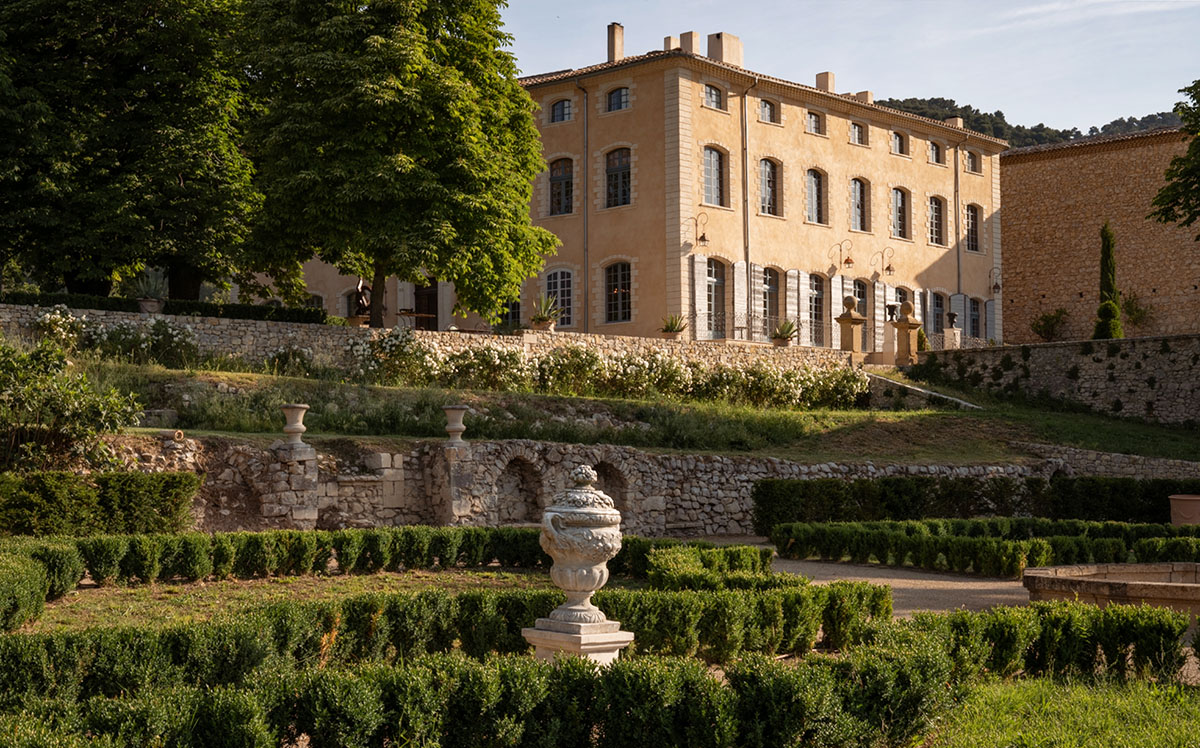
17th and 18th century construction Architectural style: Louis XIV period
The Château du Grand-Pré was built in 1678 for Françoise de Cambis, widow of Honoré de Brancas Forcalquier, Count of Forcalquier.
In 1753, the château was sold to Jean d’Ailhaud, a doctor of medicine and surgeon, the inventor of a purgative powder renowned throughout Europe, which enabled him to become secretary to King Louis XV.
The estate includes an imposing quadrangular bastide, later remodeled in the Louis XV style, a chapel, and farm buildings.
The château was enlarged and redecorated in the mid-18th century. Jean d’Ailhaud’s son and grandson continued to develop the property, building a factory for the production of the purgative powder, an oil mill, a dovecote, and gardens.
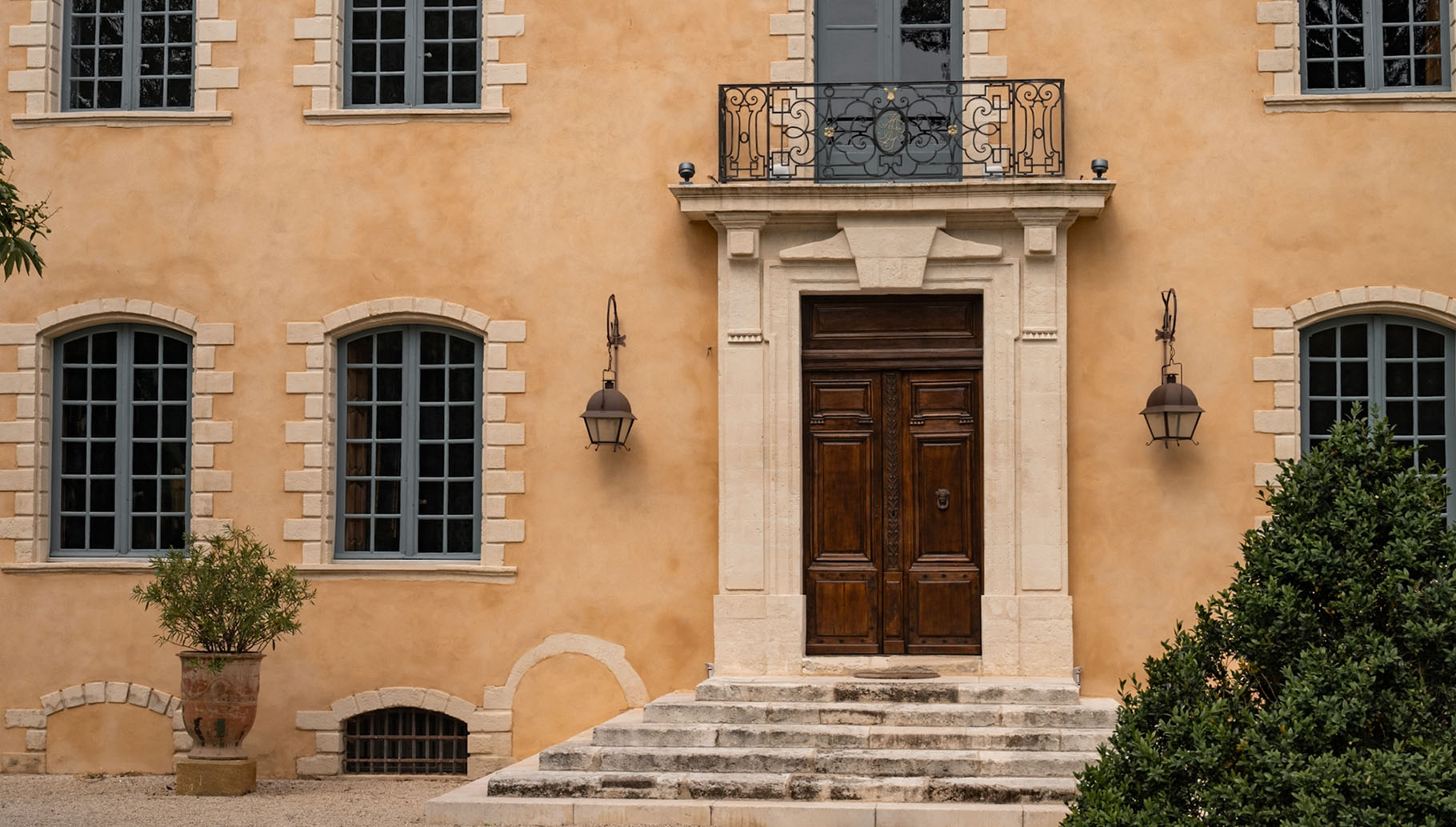
A visionary physician ownerThe rise of the purgative powder
Jean d'Ailhaud (1674-1756) came from the minor nobility of Provence. A pioneering physician and surgeon, as well as an ingenious businessman, he developed a purgative powder and innovative business methods that led him to become one of the wealthiest men in the Provençal region.
Jean d'Ailhaud's first initiative was to assert that people should no longer be bled, as it was killing them. This stance before the medical faculty was audacious, because for centuries, a doctor's first instinct had been to bleed their patients. Jean d'Ailhaud, who studied at the Faculty of Medicine in Montpellier, was strongly influenced by the community of Jewish doctors he frequented, who held a divergent approach to traditional medicine.
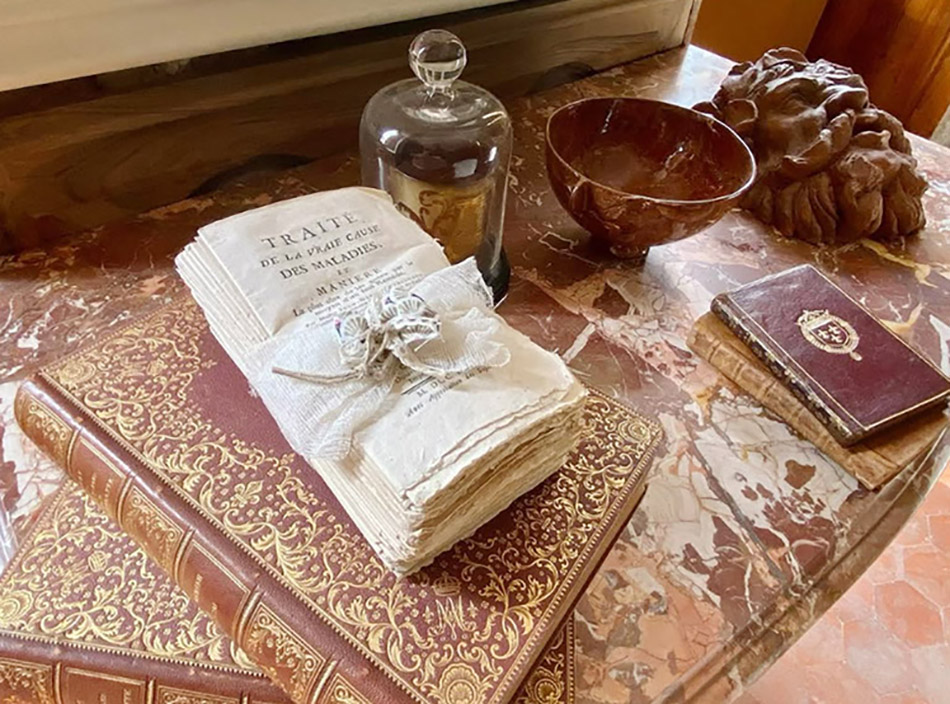
No longer bleeding from his patients, who were naturally improving, Jean d'Ailhaud began to establish his reputation. However, he still needed to find an alternative way to purify the blood. This led him to develop the recipe for his purgative potion, made from dandelion root, poppy, and chimney ashes filtered through increasingly fine woven cloth. In short, Jean d'Ailhaud had just invented activated charcoal.
Before acquiring Château du Grand Pré, he was given the opportunity to extend his reputation in Versailles. He was summoned to the bedside of Louis XIV to treat the King’s gangrene. The treatment with the potion was unsuccessful, but he was then asked to treat the king's brother, Philippe d'Orléans. Delighted with his recovery, Philippe d'Orléans wrote a letter to Jean d'Ailhaud praising his excellent care and expressing his gratitude. The surgeon had this letter published in all the European newspapers and became a sensation. He then sold his potion throughout Europe.
Driven by his desire to expand his business, Jean d'Ailhaud then sought to reach America and China. He realized that the best possible distributor was the Catholic Church and its missionaries. Thanks to this highly active distribution network, his products were distributed worldwide. He amassed a colossal fortune and became what would be today a major pharmaceutical company.
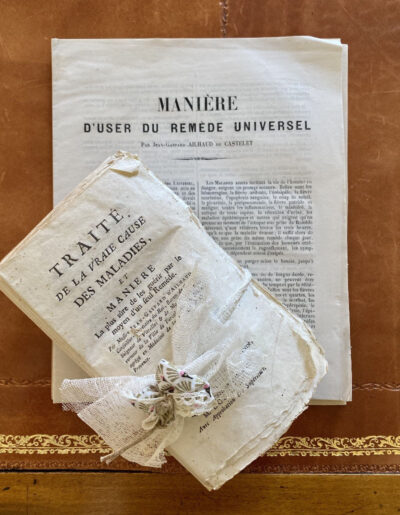
Jean d'Ailhaud lived only three years at the Château du Grand Pré, but his son, Jean-Gaspard d'Ailhaud, took over with the same talent. He published a book compiling 800 pages of testimonials of cures achieved through the use of the powder.
The d'Ailhaud father and son also produced a substantial body of literature confirming the immense success of the purgative powder, for which Vitrolles became the main production site from 1753 onward.